Against the backdrop of tightening environmental regulations and rising demand for high-performance building materials, Autoclaved Aerated Concrete (AAC) block plants stand out as a benchmark for balancing eco-friendliness and product reliability. For construction material manufacturers, mastering green production practices and strict quality control is no longer an option—it’s a core competitive advantage. This guide unpacks how AAC block plants achieve both environmental compliance and uncompromising product quality.
1. Green Production: How AAC Block Plants Meet Strict Eco-Compliance Standards
AAC block production is inherently eco-friendly, with a series of design and process optimizations that align with global environmental regulations. Here’s how these plants minimize their ecological footprint.
1.1 Low-Carbon Raw Material Selection
AAC blocks are formulated with naturally abundant, low-impact raw materials: sand, cement, lime, water, and a tiny amount of aluminum powder. Unlike traditional concrete blocks that consume large quantities of gravel and crushed stone (leading to excessive mining), AAC production relies on industrial by-products in many cases—such as fly ash from power plants or slag from steel mills. This not only reduces reliance on virgin resources but also diverts industrial waste from landfills, cutting down on carbon emissions linked to waste disposal.
1.2 Zero-Waste Production Process
A key highlight of AAC block plants is their closed-loop production system. Unused slurry, cutting scraps, and defective blocks can be fully recycled back into the mixing tank, achieving a near-100% material utilization rate. There is no solid waste discharged during the entire production cycle, eliminating the need for waste treatment costs and helping plants meet the strictest waste discharge standards. Additionally, modern AAC plants use water recycling systems to collect and filter production wastewater for reuse, reducing freshwater consumption by over 50% compared to traditional block manufacturing.
1.3 Energy-Efficient & Low-Emission Curing
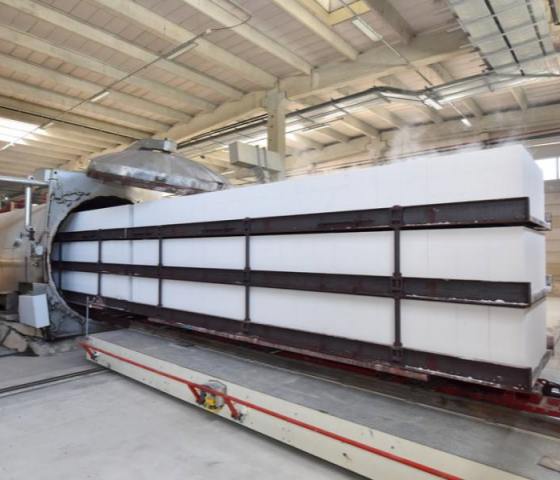
The autoclaving curing process is the heart of AAC production’s eco-friendliness. Unlike traditional concrete that requires days of natural curing (with high energy consumption for supplementary heating or drying), AAC blocks are cured in sealed autoclaves using high-pressure steam. Advanced AAC plants are equipped with heat recovery systems that capture waste heat from autoclaves to preheat raw materials, slashing overall energy consumption by 25–30%. Moreover, this closed curing process produces no dust, noise, or harmful gas emissions, making AAC plants easily compliant with regional air pollution control regulations. For businesses exploring sustainable production solutions, investing in a specialized facility for eco-friendly building materialsis a strategic step toward long-term compliance.
2. Quality Control: Ensuring Consistent, Premium AAC Block Performance
Eco-compliance means little without reliable product quality. AAC block plants implement a full-cycle quality control system to ensure every batch of blocks meets industry standards and customer expectations.
2.1 Precise Pre-Production Raw Material Testing
Quality control starts before production even begins. Reputable AAC plants conduct rigorous testing on all incoming raw materials: sand particle size, cement strength grade, lime activity, and aluminum powder purity are all verified against strict specifications. For example, aluminum powder content is calibrated to within 0.05% tolerance—this ensures the formation of uniform, tiny air bubbles in the blocks, which directly affects their lightweight, insulation, and load-bearing properties. Raw materials that fail testing are rejected immediately, preventing quality issues at the source.
2.2 Automated In-Process Quality Monitoring
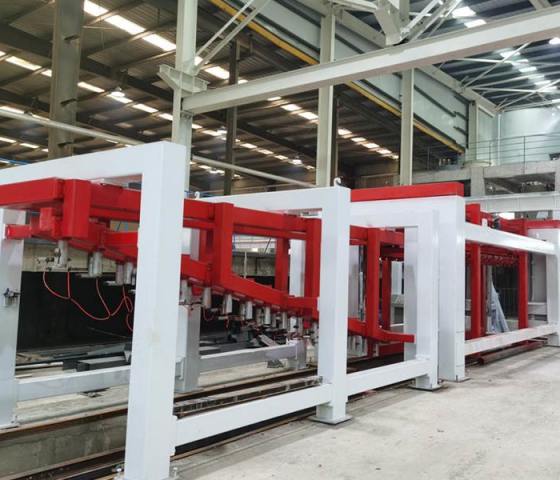
Modern AAC block plants use PLC-controlled automated production lines to eliminate human error during key processes. Sensors continuously monitor slurry temperature, mixing time, and casting thickness, adjusting parameters in real time to maintain consistency. After casting, precision equipment designed for block fabrication slices the AAC cake into blocks of exact dimensions, ensuring size accuracy within ±1mm. This automated monitoring guarantees that every block in a batch has the same density, strength, and thermal insulation performance.
2.3 Post-Curing Inspection & Certification
After autoclaving, every batch of AAC blocks undergoes a series of physical and mechanical tests. Samples are tested for compressive strength, water absorption, thermal conductivity, and freeze-thaw resistance—all in line with international standards such as EN 12620 and ASTM C1386. Only batches that pass all tests are certified and delivered to customers. Many AAC plants also obtain third-party eco-labels, such as LEED or BREEAM, to further validate their product quality and environmental credentials.
Final Thoughts
In today’s construction market, eco-compliance and product quality are two sides of the same coin. AAC block plants achieve both by leveraging sustainable raw materials, closed-loop production, and automated quality control systems. For manufacturers looking to thrive in a green economy, investing in a well-designed AAC block plant is not just a way to meet regulations—it’s a strategy to deliver high-value, eco-friendly products that win over customers and secure long-term profitability. Visit this site: www. aacblockmanufacturingplant.com to learn more.